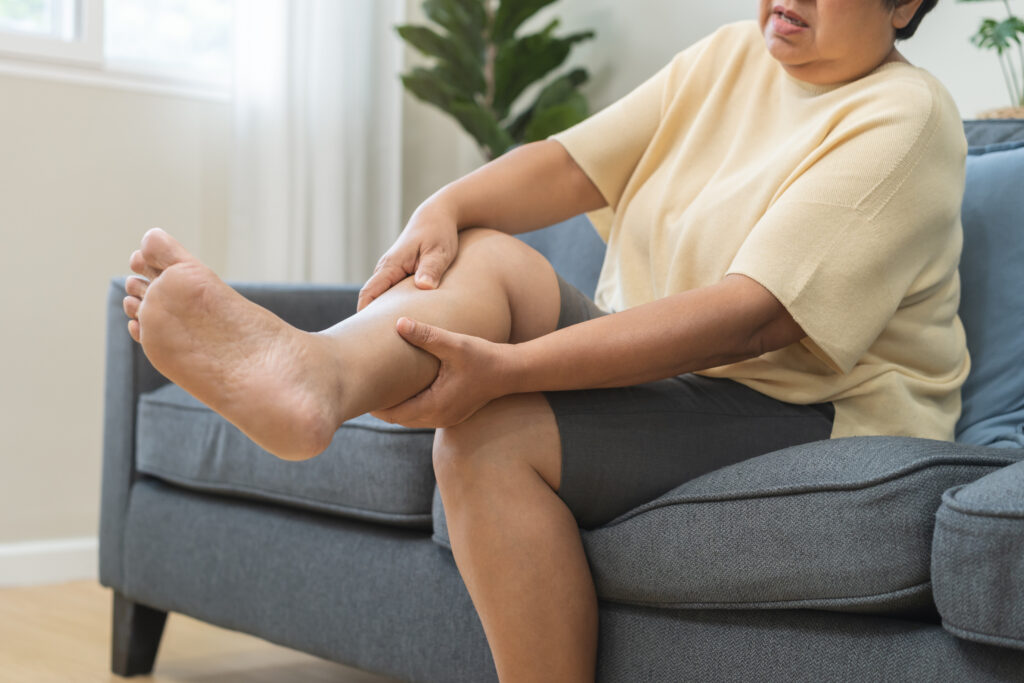
Leg pain can be frustrating, especially when the cause is not immediately obvious. Some people notice aching or cramping when they walk, while others experience numbness, weakness, or a feeling of heaviness in their legs. Because many different conditions can cause similar symptoms, it is easy to assume leg pain is simply part of aging or arthritis.
Leg pain often originates from one of three systems in the body: the joints, the nerves, or the blood vessels.
Identifying the source of your symptoms is important because each condition requires a different treatment approach. While arthritis and nerve disorders are common causes of leg pain, poor circulation caused by peripheral artery disease (PAD) can produce similar symptoms and frequently goes undiagnosed.
What Activities Trigger Your Leg Pain Symptoms?
One of the most helpful ways to determine the cause of leg pain is to pay close attention to when symptoms occur and what relieves them.
Consider the following questions:
- Does the pain begin after walking a certain distance?
- Does it improve with rest?
- Is it associated with numbness or tingling?
- Does changing positions relieve the discomfort?
- Is the pain centered around a specific joint?
The answers can provide valuable clues about whether your symptoms stem from a joint condition, a nerve problem, or poor circulation.
What Does Leg Pain Due to Arthritis Feel Like?
Joint-related pain most commonly affects the knees, hips, or ankles. Osteoarthritis, the most common form of arthritis, occurs when the protective cartilage within a joint gradually wears down over time.
Common symptoms of joint pain include:
- Aching or stiffness in a specific joint
- Pain that is worse in the morning or after prolonged sitting
- Swelling or tenderness around the joint
- Grinding, clicking, or popping sensations with movement
- Discomfort that gradually worsens with activity
Unlike circulation problems, arthritis symptoms often improve slightly as the joint “warms up” with gentle movement.
Could Nerve Damage Be Causing Your Leg Pain?
Nerve-related pain often feels distinctly different from joint pain or poor circulation. Conditions such as sciatica, spinal stenosis, and peripheral neuropathy can develop when nerves become compressed, irritated, or damaged.
Signs of nerve-related leg pain may include:
- Burning or electric-like sensations
- Tingling or “pins and needles”
- Numbness in the leg or foot
- Pain radiating from the lower back into the leg
- Weakness or difficulty lifting the foot
- Symptoms that improve with sitting or bending forward
For example, spinal stenosis frequently causes leg discomfort while walking that improves when sitting down or leaning forward, such as while pushing a shopping cart.
What Are the Symptoms of Poor Circulation in the Legs?
Poor circulation caused by peripheral artery disease (PAD) often creates a distinct pattern of symptoms that differs from joint or nerve pain.
PAD develops when plaque builds up inside the arteries, narrowing them and reducing blood flow to the legs. During physical activity, leg muscles require more oxygen-rich blood. When blood flow cannot meet that demand, the muscles may begin to cramp, ache, or feel heavy. This symptom is known as claudication.
Common signs of PAD include:
- Cramping, aching, or heaviness in the calf, thigh, or buttock
- Symptoms that begin after walking a predictable distance
- Pain that improves quickly with rest
- Little to no discomfort while sitting still
- Cold feet or lower legs
- Slow-healing wounds on the feet or legs
One of the most telling features of PAD is the consistency of symptoms. Many patients find that discomfort begins after walking roughly the same distance each time and resolves within minutes of stopping, only to return activity resumes. If you notice this “walk-rest-walk” pattern, it may be a sign of reduced blood flow and should be evaluated by a vascular specialist.
Comparing Arthritis, Nerve Pain, and Peripheral Artery Disease
| Feature | Joint Pain | Nerve Pain | PAD (Poor Circulation) |
| Location | Knee, hip, ankle | Back, leg, foot | Calf, thigh, buttock |
| Sensation | Aching, stiffness | Burning, tingling, shooting | Cramping, heaviness |
| Trigger | Joint movement | Position changes | Walking |
| Relief | Rest, gentle movement | Sitting or changing position | Brief rest |
| Associated Symptoms | Swelling, stiffness | Numbness, weakness | Cold feet, wounds |
When Should You See a Vascular Specialist for Leg Pain?
Consider scheduling a vascular evaluation if you experience:
- Leg pain that consistently begins while walking
- Symptoms that improve with rest and return with activity
- Cold, pale, or discolored feet
- Slow-healing sores or wounds
- Leg fatigue that limits your ability to walk
- A history of smoking, diabetes, high blood pressure, or high cholesterol
PAD is highly treatable, especially when diagnosed early. Importantly, PAD affects more than the legs. It is also associated with an increased risk of heart attack and stroke.
How is Poor Circulation Due to PAD Diagnosed and Treated?
Testing often begins with an ankle-brachial index (ABI), a simple, non-invasive test that compares blood pressure in the arms and legs to assess circulation.
When necessary, vascular ultrasound or advanced imaging studies can identify narrowed or blocked arteries and guide treatment decisions.
Treatment options may include:
- Supervised exercise therapy
- Smoking cessation
- Medications
- Minimally invasive procedures such as angioplasty or stenting
- Surgical intervention for advanced disease
With appropriate treatment, many patients experience significant symptom relief and are able to return to walking farther with less discomfort.
Find Relief for Leg Pain Due to PAD In Baton Rouge
Recognizing the pattern of your symptoms is often the first step toward finding answers.
If your leg pain consistently occurs during walking and improves with rest, poor circulation may be playing a role. A vascular evaluation can help identify the underlying cause and ensure you receive the appropriate treatment.
At CVT Surgical & Vein Therapy Center in Baton Rouge, our specialists help patients throughout the Greater Baton Rouge area find answers and restore mobility. Schedule an evaluation today to learn what may be causing your leg pain.