Many types of leg pain improve when you stop moving. Muscle soreness eases with rest, arthritis may calm after sitting down, and peripheral artery disease (PAD) often causes pain that goes away once you stop walking.
But what if your leg pain begins while you’re resting?
Pain that develops while sitting, lying down, or trying to sleep may be a sign of critical limb ischemia (CLI), an advanced form of peripheral artery disease. Because this condition significantly reduces blood flow to the legs and feet, it can become a limb-threatening medical emergency if left untreated.
Understanding the symptoms of critical limb ischemia can help you recognize when it’s time to seek prompt medical attention.
What Is Critical Limb Ischemia?
Critical limb ischemia occurs when plaque buildup inside the arteries becomes so severe that blood can no longer deliver enough oxygen and nutrients to the tissues in the legs and feet.
In the earlier stages of PAD, reduced blood flow typically causes discomfort only during physical activity because the muscles require more oxygen while walking. As the disease progresses, however, circulation may become so limited that the tissues cannot receive enough oxygen even when the body is at rest.
Without treatment, prolonged lack of blood flow can lead to chronic pain, non-healing wounds, tissue damage, infection, and, in severe cases, amputation.
Why Does Critical Limb Ischemia Cause Pain at Rest?
Healthy arteries continuously supply oxygen-rich blood to the muscles, skin, and other tissues in your legs. In critical limb ischemia, severely narrowed or blocked arteries restrict the blood flow to the point that tissues remain oxygen-deprived even when you’re not active.
This reduced circulation often causes ischemic rest pain, a persistent aching, burning, or throbbing discomfort that commonly affects the feet or toes.
Many people notice the pain becomes worse:
- While lying in bed
- During the night
- After sitting with their feet elevated
- During extended periods of rest
Patients may find temporary relief by dangling their legs over the side of the bed or standing up. Gravity helps blood flow downward into the feet, briefly improving circulation and easing discomfort. While this may provide short-term relief, it does not address the underlying blockage.
What Are the Symptoms of Critical Limb Ischemia?
Resting leg pain is one of the hallmark symptoms of critical limb ischemia, but it is rarely the only sign. As circulation continues to decline, other symptoms may develop as the tissues struggle to receive enough oxygen.
Common symptoms include:
- Persistent pain in the feet or toes while resting
- Pain that becomes worse at night
- Relief when lowering the affected leg
- Cold feet or lower legs
- Pale, bluish, or shiny skin
- Weak or absent pulses in the feet
- Numbness or weakness
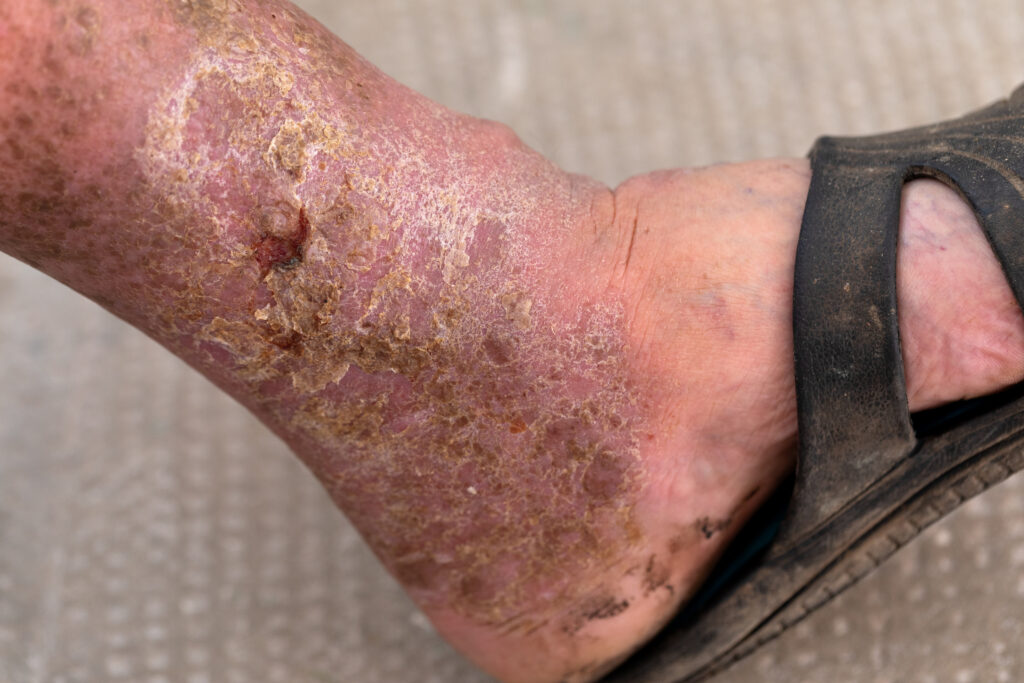
- Slow-healing sores or ulcers on the feet or legs
- Blackened skin or tissue (gangrene)
Unlike leg cramps caused by exercise or overuse, these symptoms often do not improve simply by resting or changing positions.
How Is Critical Limb Ischemia Different from Typical PAD?
Critical limb ischemia develops from peripheral artery disease, but the symptoms are much more severe.
| Peripheral Artery Disease (PAD) | Critical Limb Ischemia (CLI) |
| Pain occurs during walking or exercise | Pain occurs even while resting |
| Symptoms improve with rest | Pain persists during rest and often worsens at night |
| Claudication is the primary symptom | Ischemic rest pain is the primary symptom |
| Tissue damage is uncommon | Ulcers, wounds, and tissue damage may occur |
| Earlier stage of disease | Advanced stage of disease |
While intermittent leg pain during activity should always be evaluated, pain that occurs at rest often indicates that blood flow has become critically impaired and requires urgent medical attention.
When Should You Seek Medical Care for Resting Leg Pain?
Leg pain that develops while you’re resting should never be ignored, especially if it is persistent or accompanied by changes in the skin or feet.
You should seek prompt medical evaluation if you experience:
- Leg or foot pain while sitting or lying down
- Pain that regularly wakes you from sleep
- A sore or ulcer that is not healing
- Skin that appears unusually pale, blue, or black
- Sudden worsening of circulation symptoms
- Coldness or numbness in one foot compared to the other
Early diagnosis can help restore blood flow before permanent tissue damage occurs. Waiting too long may increase the risk of infection, delayed wound healing, or limb loss.
How Is Critical Limb Ischemia Diagnosed?
A vascular specialist can evaluate whether poor circulation is causing your symptoms through a combination of a physical examination and specialized vascular testing.
Depending on your symptoms, your evaluation may include:
- A review of your medical history and symptoms
- Pulse examination
- An ankle-brachial index (ABI) test
- Duplex vascular ultrasound
- CT angiography or other advanced imaging, when appropriate
These tests help determine how severely blood flow has been reduced and identify where blockages are located so the most appropriate treatment plan can be developed.
How Is Critical Limb Ischemia Treated?
The primary goals of treatment are to restore blood flow, relieve pain, promote wound healing, and reduce the risk of limb loss.
Treatment recommendations vary based on the severity of the disease and each patient’s overall health but may include:
- Smoking cessation
- Cholesterol and blood pressure management
- Medications to reduce cardiovascular risk
- Supervised management of diabetes and other chronic conditions
- Angioplasty to open narrowed arteries
- Stent placement to improve blood flow
- Other minimally invasive endovascular procedures
- Surgical bypass in selected cases
- Specialized wound care for ulcers or non-healing wounds
Because critical limb ischemia is an advanced vascular condition, early intervention often provides the best opportunity to preserve healthy tissue and improve long-term outcomes.
Treatment for Critical Limb Ischemia in Baton Rouge
Critical limb ischemia is a serious condition, but prompt diagnosis can help prevent it from becoming even more severe. If you’re experiencing persistent pain in your feet or legs while resting, don’t assume it’s simply part of getting older or living with chronic pain.
The team at CVT Surgical Center in Baton Rouge offers comprehensive vascular evaluations and advanced diagnostic testing to identify the cause of your symptoms. If poor circulation is affecting your leg health, early treatment may help restore blood flow and protect your long-term mobility. Contact CVT Surgical Center today to schedule an evaluation with a vascular specialist.